
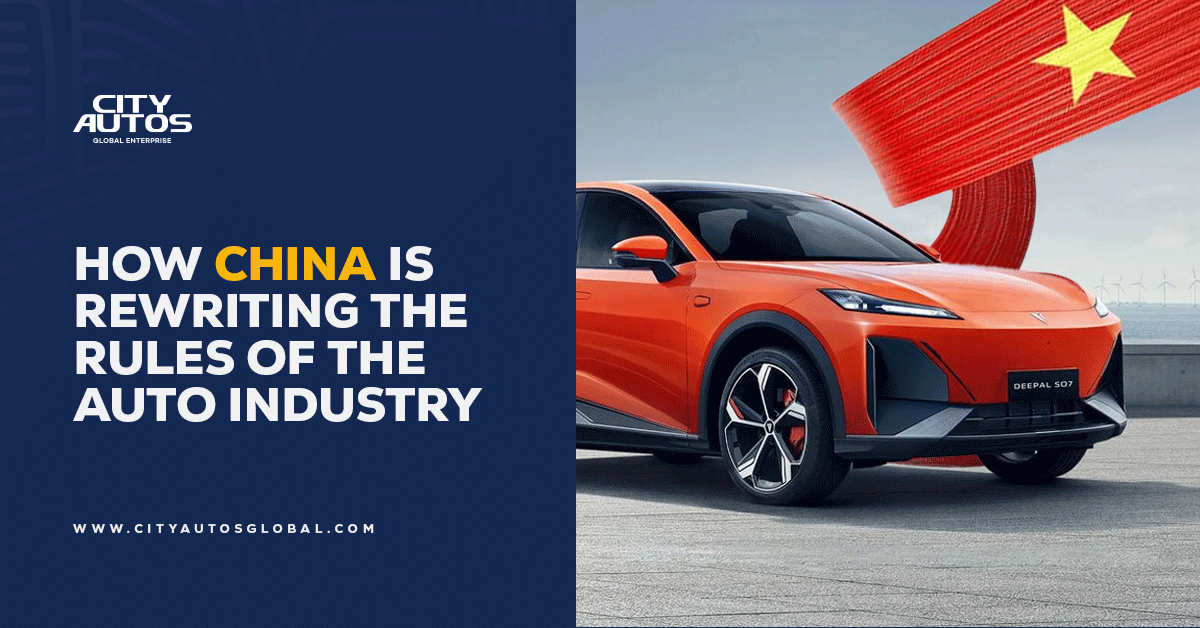
For most of the 20th century, if you said “automotive powerhouse,” people thought of three places: Detroit, Stuttgart, and Tokyo. These were the cities that defined how the world drove. Today, a new name belongs on that list and it is not a city. It is an entire country: China.
What is happening in the Chinese auto industry right now is not just impressive. It is seismic. And if you care about cars, you need to be paying attention.
From Importer to World Leader
Not long ago, China was primarily a consumer of foreign-made vehicles. German luxury brands, Japanese sedans, and American SUVs flooded its showrooms. Fast forward to today, and the script has completely flipped. China is now the world’s largest automobile exporter, having overtaken Japan in 2025, and it shows no signs of slowing down.
- 7.1 million vehicles exported in 2025
- 10 million+ projected exports in 2026
- 35.6% global market share in 2025
Those numbers are staggering. The growth trajectory is even more striking. China is on pace to achieve a 41% increase in auto exports in 2026 alone. To put that into perspective, the entire Nigerian car market is only a fraction of what China exports in a single month.
The Electric Vehicle Revolution Made in China
The secret weapon behind China’s rise is not just cheaper labour or government subsidies, although those factors play a role. It is electric vehicles. China made a deliberate and strategic bet on EVs early, and it paid off enormously.
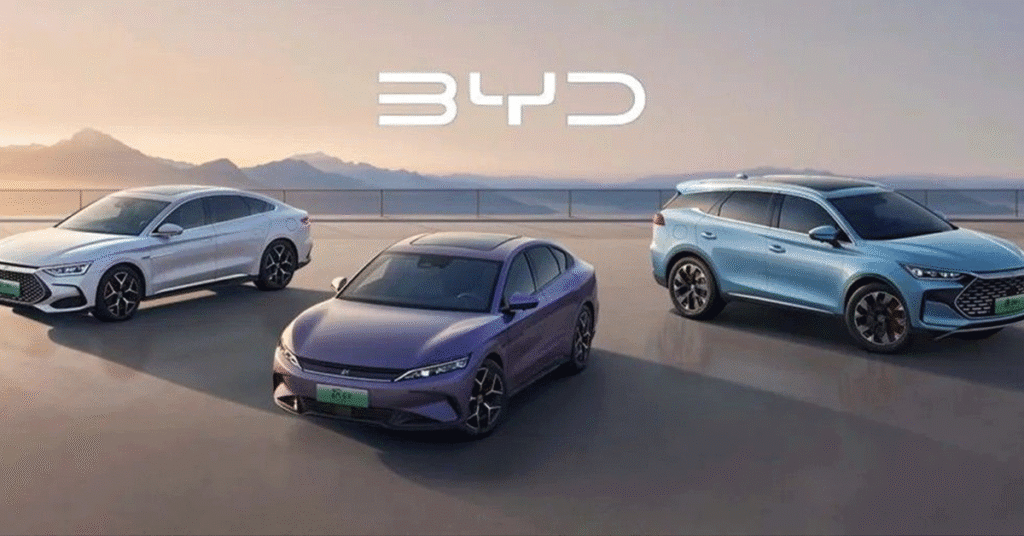
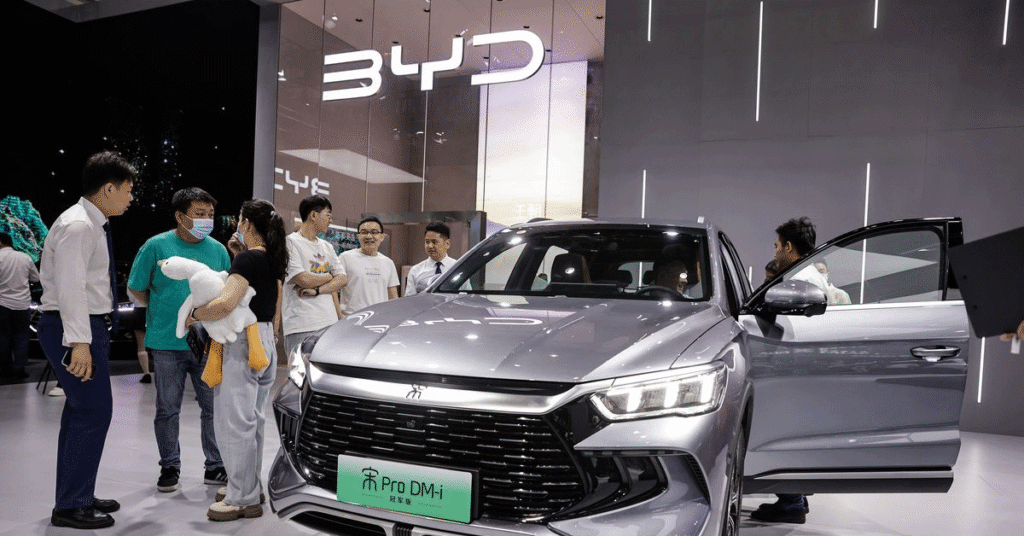
BYD, once an obscure battery company, is now the world’s number one electric vehicle manufacturer, selling over 4.6 million new energy vehicles in 2025. The company operates in more than 100 countries across six continents. Its latest model, the 2026 Seagull, is a micro EV equipped with LiDAR technology. These are features you would normally expect in a luxury vehicle, now priced for everyday buyers.
China is not just building EVs. It is actively shaping the next generation of automotive technology, from digital cockpits to over-the-air updates and autonomous driving systems.
Beyond BYD, there is CATL, the global leader in EV battery production, pioneering next-generation sodium-ion and solid-state batteries that promise longer range, faster charging, and improved safety.
Then there is Xiaomi, the smartphone giant that made a stunning entry into the car market. When its YU7 model launched, it broke sales records. A phone company selling cars shows just how different this industry is becoming.
A $2,000 Head Start on Everyone Else
Here is what makes Chinese automakers especially formidable: cost advantage.
Analysts at UBS estimate that Chinese manufacturers like BYD have a cost advantage of approximately $2,000 per vehicle from battery production alone. That is before factoring in manufacturing efficiency, supply chain control, and scale.
By 2030, Chinese brands are projected to hold 35% of the global automotive market. Europe’s traditional giants such as Volkswagen, Stellantis, and Renault are already feeling the pressure.
Going Global and Building Local
What is particularly smart about China’s strategy is that it is not just exporting cars. It is building factories abroad.
Battery plants are going up in Hungary, Turkey, and Morocco. Vehicle assembly lines are being established in Spain, Brazil, and Thailand. Chinese brands like Chery, Geely, and Great Wall are setting up dealerships and service networks across Southeast Asia, South America, and the Middle East.
This is long-term thinking. By manufacturing closer to their markets, Chinese brands reduce shipping costs, sidestep trade tariffs, and build genuine local presence. It is the same playbook Toyota and Volkswagen used decades ago, but at a much faster pace.
What This Means for Car Buyers in Nigeria
You might be wondering what all of this means for you here in Lagos. More than you might think.
As Chinese vehicles continue to flood global markets, the ripple effects will increasingly reach Africa too. More affordable and better-equipped vehicles will find their way onto our roads, and that is good news for buyers who want quality without the premium price tag.
At City Autos, we keep a close eye on global automotive shifts because they shape what the best vehicles look like and what you deserve to drive. Whether it is a well-sourced premium SUV or a reliable family car, our standard remains the same: inspected, trusted, and delivered with transparency.
The world of cars is changing fast. China is leading that change. And at City Autos, we are here to make sure you benefit from it.